Commercial Grease Trap Cleaning & FOG Compliance
West-End Septic & Pumping provides scheduled grease trap and interceptor pumping for restaurants, hotels, and commercial kitchens across Corona and the Inland Empire. Every service includes a waste manifest, 25% Rule compliance check, and documentation you can hand directly to your health inspector.
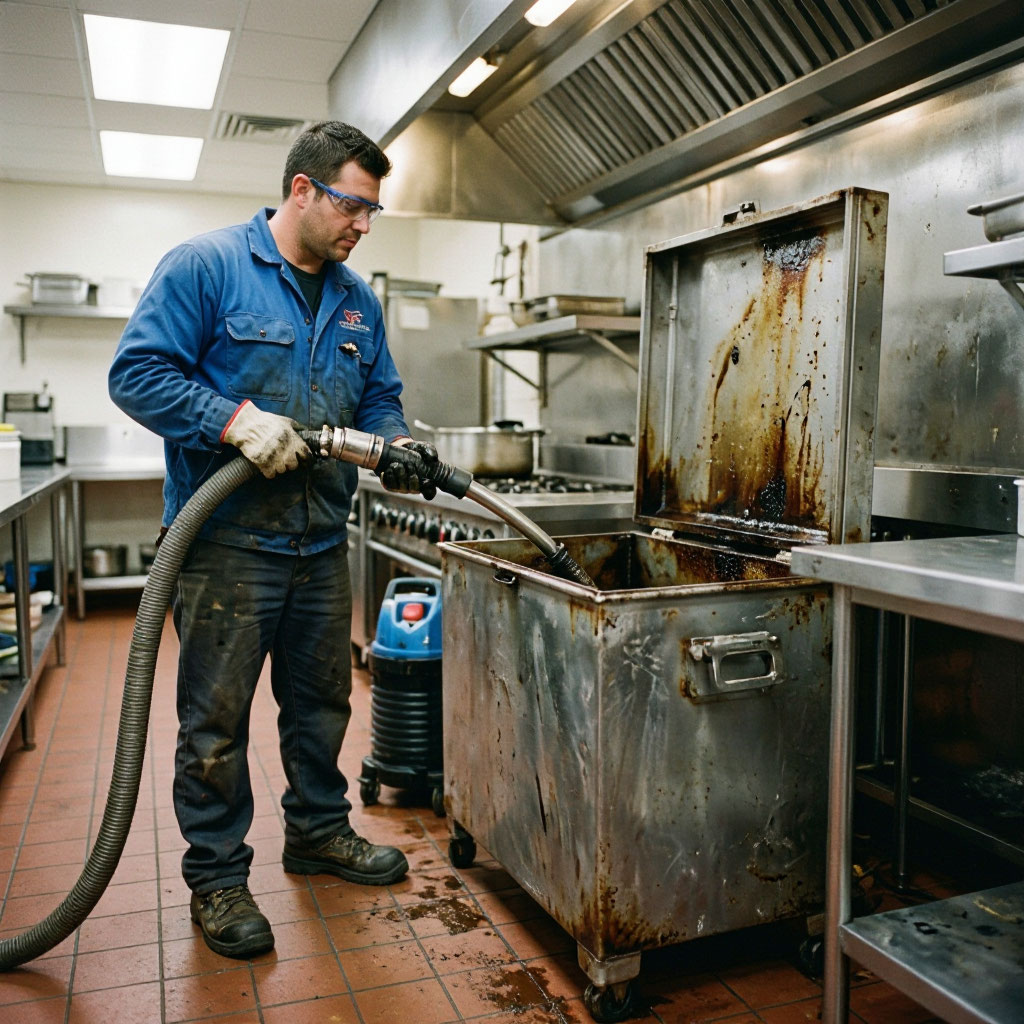
Why Grease Trap Maintenance Is Non-Negotiable
FOG buildup is the leading cause of commercial sewer blockages in California. Neglecting your trap doesn't just risk a backup — it risks your health permit.
Avoid Health Code Violations
California FOG programs require documented maintenance. Missing manifests or an overfull trap can trigger fines starting at $500 and escalating into thousands for repeat violations.
Prevent Costly Backups
A grease overflow can shut down your kitchen mid-service. Beyond lost revenue, emergency cleanup and sewer line jetting can cost $1,500 to $5,000 or more.
Pass Inspections With Confidence
When the health inspector arrives, you'll have every manifest, every service date, and every compliance check on file — organized and ready.
Protect Your Equipment
Grease that bypasses your trap coats pipes, clogs pumps, and accelerates wear on downstream wastewater equipment. Regular cleaning extends the life of everything it touches.
The 25% Rule — California Standard
Every FOG control program in California is built around the same benchmark: clean your interceptor when grease and solids reach 25% of its total capacity. Here's what that means in practice.
When grease + solids reach 25% of your interceptor's hydraulic depth, cleaning is required.
Why 25%?
At 25% accumulation, the interceptor's hydraulic retention time drops below the level needed to properly separate FOG from wastewater. Grease begins flowing through — into your sewer line, into the municipal system, and potentially onto your kitchen floor.
Minimum Service Frequency
Even if your trap hasn't hit 25%, California jurisdictions require cleaning at least once every three months for most food service establishments. High-volume kitchens — those doing more than $500,000 in annual food sales or producing heavy grease loads — often need monthly service.
What We Measure Every Visit
- FOG layer thickness at inlet, middle, and outlet chambers
- Sludge depth at the bottom of the trap
- Baffle condition and seal integrity
- Inlet and outlet pipe flow
- Any structural cracks or signs of failure
Trap Types We Service
Different kitchen configurations call for different equipment. Here's what we work with.
Under-Sink Grease Traps
Small, floor- or wall-mounted units typically under 50 gallons. Common in cafés, bakeries, and smaller kitchens. Typically require the most frequent service.
In-Ground Interceptors
Large concrete or fiberglass vaults buried outside the building, ranging from 500 to 2,500+ gallons. Standard for full-service restaurants and high-volume kitchens.
Multi-Chamber Systems
Higher-capacity interceptors with two or three internal compartments. Each chamber must be pumped and checked individually — partial pumping is not compliant.
Grease Service Pricing
Transparent ranges based on typical commercial jobs in Riverside County. Volume pricing available for multi-location accounts.
- Full pump-out
- Waste manifest
- Baffle check
- Disposal included
- Full pump-out
- Waste manifest
- 25% Rule measurement
- Baffle & pipe inspection
- Multi-chamber pump-out
- Waste manifest
- Compliance documentation
- Volume-based pricing
Prices depend on trap size, access difficulty, FOG accumulation level, and service frequency. Emergency same-day service adds $75–$150. Multi-location accounts receive discounted rates. See our full pricing page for additional detail.
What's Included in Every Service
We don't just pump and leave. Every visit includes documentation and inspection that keeps you compliant.
Complete Pump-Out
All FOG, liquid, and sludge removed from every chamber. Partial pumping is not compliant and we never do it.
25% Rule Measurement
We measure FOG and solids depth before pumping and record the percentage of total capacity so you know exactly where you stand.
Waste Manifest
A complete disposal manifest documenting volume removed, disposal facility, and date of service. Retain for three years for compliance.
Baffle & Pipe Inspection
We check inlet and outlet baffles, pipe flow, and structural integrity. If something is cracked or blocked, we document it and recommend repair.
Next Service Reminder
Based on your kitchen's volume and the 25% Rule, we recommend a specific next service date and can add it to our schedule.
Clean Work Area
We use spill containment and clean up thoroughly. Your kitchen or back lot is left exactly as we found it — minus the grease.
Service Process for Commercial Kitchens
From first call to final manifest — here's how we work with restaurants and commercial facilities.
Initial Assessment
We ask about your kitchen volume, cuisine type, trap size and location, and current service frequency. From that we recommend a schedule and give you a firm per-service price.
Phone call · 5–10 minScheduled Service
We arrive in the agreed window — before opening, between shifts, or after close. Our truck positions for hose reach, and we set up spill containment before opening the trap.
15–30 min setupPump-Out & Inspection
We measure FOG and solids levels, pump every chamber completely, inspect baffles and pipes, and document everything with photos if needed.
20–45 minManifest & Documentation
You receive your waste manifest before we leave. We keep digital copies of every service for your records, available any time you need them.
Same visitCompliance & Documentation
Everything you need to stay on the right side of your local FOG program.
Waste Manifests
Every pump-out generates a manifest documenting volume, disposal site, and date. We keep digital copies on file for three years — the California standard retention period.
25% Rule Verification
We measure FOG and solids before pumping and record the percentage. This proves your service was performed before the threshold was exceeded.
Service Frequency Log
A running record of every service date, demonstrating a consistent maintenance schedule to health inspectors and municipal auditors.
Emergency Response
If your trap overflows or a FOG blockage threatens your operation, our 24/7 line connects you to a live dispatcher. Typical response within 2–4 hours.
Who We Serve
Commercial grease service for every type of food service operation.
Full-Service Restaurants
High-volume kitchens with in-ground interceptors. Monthly or quarterly service based on grease output.
Hotels & Resorts
Multiple kitchens, banquet facilities, and room service operations. Coordinated scheduling across all food production areas.
Cafés & Bakeries
Smaller under-sink traps with frequent service needs. Flexible scheduling around morning rush.
Ghost Kitchens
Multiple brands sharing one space. We coordinate with property management to service shared traps and separate lines.
Schools & Institutions
Cafeterias and institutional kitchens with regulatory oversight. Documentation formatted for public agency audits.
HOAs & Property Managers
Community clubhouses, shared facilities, and multi-tenant commercial properties with common kitchen areas.
Grease Trap FAQ
Answers to the most common questions from restaurant owners and facility managers.
It depends on your kitchen volume and trap size. California's 25% Rule requires cleaning when grease and solids reach 25% of the interceptor's capacity — but at minimum every three months for most food service establishments. High-volume kitchens often need monthly or biweekly service. We'll assess your specific operation and recommend a schedule that keeps you compliant without over-servicing.
The 25% Rule is the standard benchmark used by California FOG programs. It means your grease interceptor must be cleaned whenever grease and solids accumulate to 25% of its total hydraulic depth. At that point, the trap can no longer effectively separate FOG from wastewater. We measure this on every visit and record it on your manifest, so you always have proof of compliance.
Yes. California jurisdictions require food service establishments to retain waste manifests for three years. Health inspectors and municipal auditors can request them at any time. We provide a manifest after every service and keep digital copies on file for your convenience. If you ever lose a paper copy, we can reissue it from our records.
Stop kitchen operations immediately, contain the spill if it's safe to do so, and call our 24/7 line at (951) 520-1020. A grease overflow can discharge FOG into the municipal sewer system, triggering fines and potential permit action. Our emergency crew typically responds within 2–4 hours. See our Emergency Service page for more details.
Yes. We understand that restaurant kitchens can't afford downtime during service hours. We schedule most grease trap cleaning for early mornings, late nights, or days when your kitchen is closed. Just tell us when works best, and we'll build the route around your schedule.
Absolutely. We work with restaurant groups and multi-location operators throughout Riverside, San Bernardino, and Orange counties. Volume-based pricing applies, and we can provide consolidated billing and reporting across all your properties. Contact us for a multi-location quote.
If we find cracked baffles, damaged lids, or structural issues during service, we document it and give you a written repair estimate. Common repairs include baffle replacement, lid replacement, and riser installation for easier future access. See our Septic Repair page for the types of fixes we handle.
Proper sizing depends on your kitchen's fixture count, flow rate, and menu type. If your trap fills quickly between services, it may be undersized. We can evaluate your setup during the first service and recommend whether a larger interceptor or additional trap is needed. Oversized traps waste money; undersized traps fail to protect your sewer line.
Keep Your Kitchen Compliant
Scheduled grease trap cleaning with full documentation. Call for a commercial quote or book your first service online.